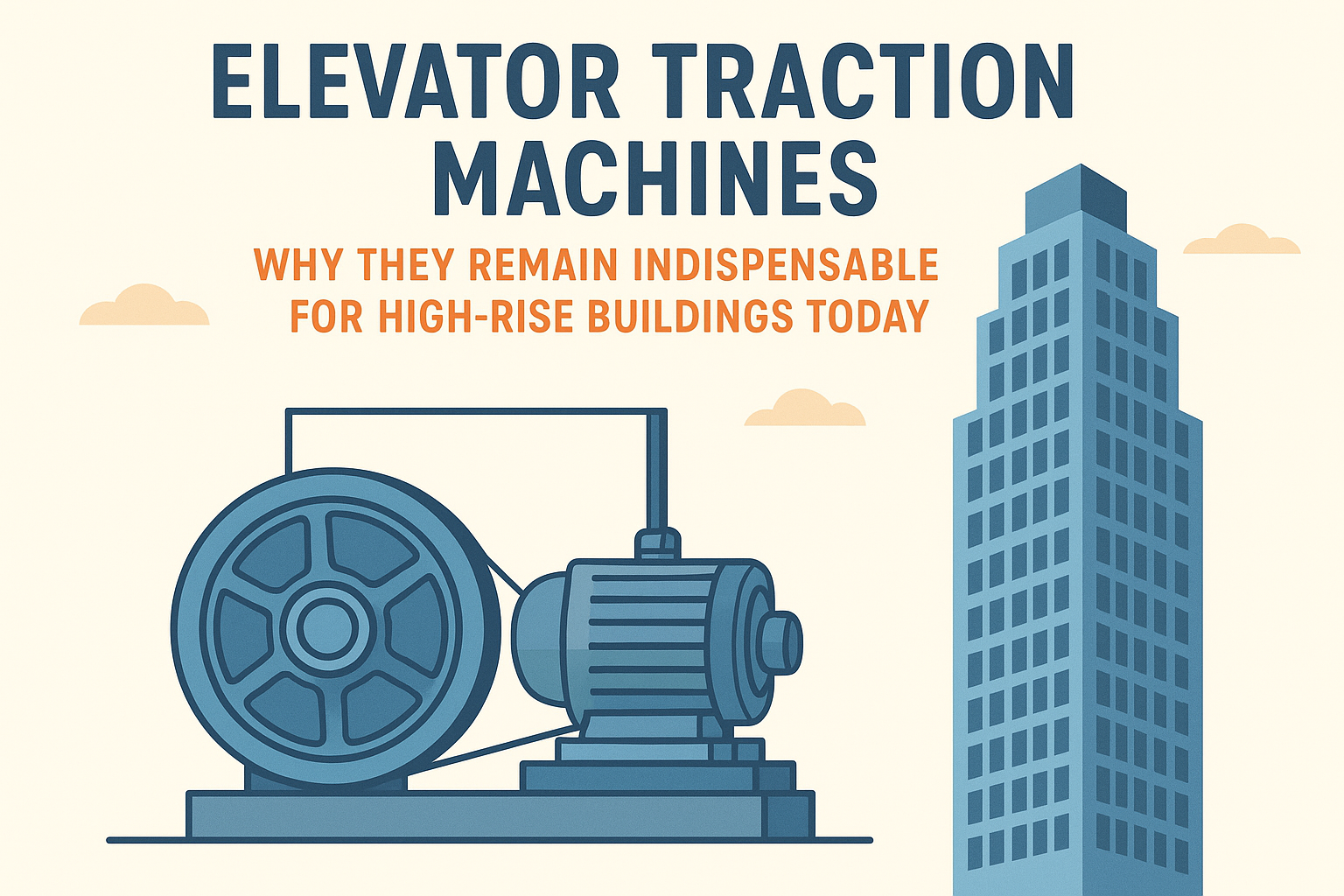
The ever-growing urban need for high-rise buildings has revolutionized building practice and architecture. Skyscrapers now define the cityscapes, and one of the most fundamental features to address is the vertical transportation for these buildings. Traction machines form the backbone of this transportation infrastructure. As cities grow taller and denser, traction machines ensure elevators run efficiently, safely, and sustainably.
Elevators have undergone great changes ever since their invention. Hydraulic machines were the preference for some time, but the trend is now towards the use of traction elevators, especially for high buildings where efficiency, speed, and reliability count the most. In this article, the requirement for elevator traction machines, their innovations, their applicability for high buildings, and their impact upon the urban infrastructure for the future is being discussed.
Understanding Elevator Traction Machines
Before delving into their use in modern architecture, one must know about the operation and nature of elevator traction machines. Traction elevators use a set of ropes or belts for raising and descending the elevator car. These ropes travel over a sheave (a pulley fixture) mounted onto an electric motor. As the motor revolves, the motor moves the ropes, causing the elevator car to rise or fall.
The key features of a traction system are:
- Electric Motor: Drives the elevator car.
- Ropes or Belts: Connect the car to the counterweight.
- Sheave: Pulley system for rope movement.
- Counterweight: Balances the car, reducing energy usage.
In high-rise buildings, the elevator traction machines also find preference owing to their efficiency, rapid operation, and reliability over the others like the hydraulic elevator.
The Need for Traction Machines in High-Rise Buildings
As cities grow taller, the demand for high buildings has increased. These buildings require handling thousands of passengers each day, and rapid and efficient vertical travel is thus required. Following points describe the need for skyscraper traction machines:
1. Speed & Effectiveness
In high-rise structures, the elevator machinery has to travel great distances over short distances. Traction machines for the elevator provide for high-speed travel, up to 4,000 feet per minute for some modern designs. This is necessary for buildings over 20 stories high, where waiting times could otherwise be great and inefficient.
One of the greatest advantages of the traction type is the capability for faster travel when compared to the hydraulic type, where the highest capacity is attained by the capability for rapid travel over great distances. As skyscrapers grow taller, the need for greater speed becomes even greater for office buildings, hotels, or residential high-rises where the inhabitants value their time.
2. Energy Efficiency
Modern elevator traction machines are energy efficient. Unlike the fluid-dependent hydraulic-powered elevators, the counterweight concept is applied by the traction machines for reduced motor load. This is attained through the structure where the energy required for the movements by the elevator car is less, the energy efficiency by the traction elevators is increased.
Furthermore, many modern-day traction systems also incorporate regenerative drives, whereby the energy during the descending motion of the elevator car is harvested. This energy is fed back into the building grid, thus reducing the building’s overall energy consumption. Recycling energy is one essential building block towards urban sustainability, particularly when applied towards the context of high buildings where the need for frequent travel by the elevator is high.
3. Space Efficiency
In high-rise buildings, space is very valuable, and the best possible use of available space is very essential. Most traditional elevator systems, including the hydraulic elevator, require much space for their machinery and equipment. But the elevator traction machines, particularly the modern machine-room-less (MRL) machines, make the machinery room obsolete. Alternatively, the machinery for the elevator is located in the hoistway or over the elevator shaft. This frees the valuable space occupied by the machinery room for some other use.
This is particularly relevant for cityscapes where the high value of the land requires maximum space efficiency for every available square meter. MRL traction systems now find preference for their ability for space efficiency, minimizing the overall space taken by the elevator system to the bare minimum, making them suitable for modern skyscrapers.
4. Ride Quality and Ride Comfort
The experience of travel by elevator can make all the difference for the overall sense of being comfortable for the passengers. Traction machines for the elevator allow for softer and less noisy travel when one compares this type of elevator ride to the hydraulically powered one, the ride being noisy and shaking. Traction systems reduce the jerk movements when the elevator is starting and stopping, thus offering greater comfort for the passengers.
In high-rise buildings where trips by the elevator can take minutes, the ride has to be even and quiet for the building's residents for utmost satisfaction. This is even more pertinent for luxury hotels, residential skyscrapers, and business office skyscrapers where the utmost consideration is for comfort.
5. Safety and Reliability
When it comes to high-rise building vertical conveyance, security is the utmost consideration. Elevator traction machines also have many security features for secure, even operation. One of the greatest security features of the traction elevator is the counterweight, which counterbalances the weight of the car and will not enable the car to fall rapidly during the loss of power or machinery breakdown.
Modern traction elevators also involve superior control systems for the operation, position, and speed of the elevator. These can detect faults beforehand and make the necessary correction even prior to the faults posing a safety risk. Traction elevator design also allows for greater deceleration and acceleration control, providing greater safety.
Technological Innovations for Traction Machines for Lift
With ongoing innovations in the field of technology, the elevator traction machines also improve continuously, bringing the latest features for increased efficiency, energy conservation, and sustainability. Some recent innovations in the elevator traction systems follow:
1. Permanent Synchronous Motors (PMSM)
Permanent Magnet Motors are becoming more common in elevators because of their high efficiency and small size. These motors provide far more energy savings than traditional induction motors because permanent magnets are used rather than electromagnetic coils applied in these inductions. PMSM motors can work at different speeds, which is especially suitable for applications where precise control is required. Their reduced footprint, combined with better efficiency, sets these motors in a great position for high-rise buildings requiring utmost performance.
2. Regenerative Drives
Regenerative drives are energy-efficient equipment that tap the kinetic energy caused by the descending elevator car and convert the energy into electrical energy. This energy is fed back into the building grid, thereby reducing the building’s energy consumption overall. Regenerative drives find their greatest utility where the usage is high, like high-rise buildings, where over the lifespan the operation can save significant energy.
3. Double-Deck Elevators
Double-deck elevators involve two overlying cars for the elevator, which allow the elevator to travel two floors at the same time. This double-deck idea doubles the capacity for the elevator system, reducing waiting times and overall efficiency. Double-deck systems are best utilized for very high buildings, where the demand for the use of the elevator is high.
4. Machine-Room-Less (MRL) Lifts
Machine room less elevators became very common over the years due to their space efficiency. In the traditional elevator, the motor and the machinery find space in their own machine room, typically located towards the top of the building. MRL systems, instead, bring the machinery into the elevator shaft, eliminating the machine room and using valuable building space.
These systems also emit less noise and save energy, and hence are the best for urban places where space is limited and sustainability is the requirement.
5. Smart Lifts
The rise has also caught up the elevator market. New elevator traction machines use superior control systems for increased accuracy, faster response, and even predictive maintenance. For instance, the smart elevator can schedule its trips and optimize the order of the elevator calls by studying the building's traffic patterns. Smart elevators can also detect when servicing is needed and notify building managers, preventing the cost of breakdowns and overall increased dependability.
Case Studies: High-Rise Buildings Utilizing High-Tech Traction Systems
1. Guangzhou CTF Finance Centre, PRC
The Guangzhou CTF Finance Centre is one of the tallest buildings in the world, standing 530 meters high. The advanced high-speed traction machines allow smooth and fast vertical transportation. These elevators move at a speed of 1,200 m/min. Thus, ensuring that every day the building can take thousands of people up and down with minimal waiting time and great efficiency.
2. Jeddah Tower, Saudi Arabia
Set to head the skyscraper list when finished, the Jeddah Tower will incorporate innovative traction elevator machinery that is able to travel over distances of over 1,000 meters. Towering over the building creates special demands, and the elevator traction machines will need to handle the high distances and speeds demanded. Cutting-edge technology will permeate the tower, from the incorporation of Kone's UltraRope tech where the cables can be light and strong enough for the demands of such high levels.
3. One World Trade Center, New York
One of the world's most recognizable skyscrapers, One World Trade Center, features one of the latest elevator systems on the planet, one designed to bring swift and efficient travel for the building's 104 floors. High-speed traction elevators using destination dispatch technology comprise the elevator system, one that determines the optimum travel route for passengers given the travel demands. This ensures decreased waiting times and the efficient circulation of people around the building.
The Role of TectronicsIndia in Revolutionizing Elevator Traction Systems
As high-rise structures make their presence felt over the urban cityscape, the need for high-grade, efficient, and environment-friendly vertical conveyance systems is stronger now than ever. TectronicsIndia is one such contributor playing its part towards this revolution by offering innovative and robust elevator traction machines for the high demands being placed by modern architecture. TectronicsIndia is committed towards the manufacturing of gearless elevator machines where the latest technology is coupled with energy-saving designs for applications from residential buildings through high-rise skyscrapers.
One of the features of TectronicsIndia's range is their focus on the use of gearless elevator machines. These machines, where the motor is not coupled by gears with the drive sheave, have many advantages over the traditional models, including reduced noise, reduced upkeep costs, and increased energy efficiency. This is now the standard for high-rise buildings where efficiency and conservation count the most.
The company's commitment towards quality and continuous innovations ensures each elevator traction machine is the best available from the industry. Utilizing space-saving, quiet, and energy-efficient technology, TectronicsIndia is not only optimizing the efficiency of the elevators but also playing its part towards the agenda for sustainability for modern cities.
For developers and architects aiming for simplified vertical conveyance systems, TectronicsIndia provides customized solutions combining the latest innovations with economical designs. With ease-of-use interfaces prioritized alongside durability over the lifespan, the company is the leader for reinventing the high-rise building elevator systems not only for India but for the global market.
Conclusion
The rise of skyscrapers and high-rise buildings has also given rise to the need for secure and efficient vertical conveyance systems. Traction machines for the elevator have proved to be the solution for adapting the unique demands placed by the towering structures. From delivering high speed and energy efficiency to providing the ride experience, the systems are the backbone of the modern architecture.
As the demand for high-rise buildings grows, the role played by the elevator traction machines towards the urban infrastructure for the future will only grow stronger. TectronicsIndia is one of the forerunners for this revolution, providing innovative solutions for enhanced performance, sustainability, and reliability for vertical travel. High-rise buildings will become even easier, efficient, and sustainable for the next several years through continuous innovations.
